About us

We are two friends, one living in town and one in the country, who love to cook and entertain at home. We share a passion for our gardens and for the easy-going lifestyle of sub-tropical eastern Australia. And, yes, we both have garden ponds teaming with frogs.
Showing posts with label herbs. Show all posts

Saturday, 14 December 2013

Fingers of fish and other ideas...


It's been a while between blogs, lots of life going on between town and farm!

FINGERS OF FISH in HERB CRUST with SWEET POTATO FRIES

Use a bought pesto to make the herb crust, and this rather stunning finger food dish is quick and easy to prepare. Alternatively make you own fresh herb paste, which takes more time but, as always, fresh tastes best!


Use fillets of a lower-end-of-the-budget fish, with the skin on. The skin cooks to a crispy base and holds the cooked flesh together. (In the photos – ocean mullet, an oily, strong-flavoured fish that will take a strong-flavoured Asian-style herb crust).

Use four fillets of fish, lightly dusted on both sides with flour or cornflour.


Ingredients for the fish and herb paste:
4 fillets fish, skin on
2 tbs pesto
2 level tsps flour (or 1 teaspoon cornflour)
2 tbs olive oil

1. Combine pesto with flour. Press this mix to the flesh side of whole fillets. Then slice fish into serving size portions. Fry in hot pan in a little oil, skin side down for 3 minutes with the lid on to partly steam the paste.

2. Carefully turn the fish and flatten slightly. Cook further 2 -3 minutes until paste has browned to a light crust. Lift out and arrange on serving plate with sweet potato fingers and dipping sauce.


For the dipping sauce:

1. Combine equal parts light soy sauce with lime or lemon juice. Add chopped hot chilli or chopped shallot tops.

For the sweet potato fingers:

1. Peel and cut yellow sweet potato into 2cm fingers.
2. Lightly pan fry in a smear of olive oil until golden, turning once ( ≈ 5 minutes total cooking time).


CHICKEN PIECES in HERB CRUST with SWEET POTATO FINGERS


Try the same herb crust idea on trimmed chicken drumsticks or wing drumettes.

1. Dust chicken with flour. Coat well with herb paste.

2. Cook on medium heat in frying pan for 10 minutes with lid on. Turn carefully, cook for 10 – 15 minutes more with lid off. Rest 10 minutes in pan to finish cooking in retained heat before serving.


Next: another fishy idea...

Monday, 4 November 2013

Mussels...


If you are out to impress with your table manners, don’t serve mussels in the shell. To really enjoy every drop of deliciousness, you must pick them up in your fingers and slurp!


Tangy Mussel Soup, Asian style

A bag of frozen New Zealand green-lipped mussels in the shell is a great standby to keep in the freezer. To thaw, tip them into the sink (empty) and leave for 15 minutes. Then remove any visible hairy beards by pulling firmly with your fingers. There is no need to rinse frozen mussels – you will just wash away flavour. Fresh mussels, however, need to be immersed in water to remove sand.

FROGBLOG TIPS
  • To keep mussel meat tender, do not overcook - 60 seconds max, whether steaming, simmering or barbecuing.
  • If feeling fainthearted about shells, use fresh or frozen mussel meat (though it is not nearly as much fun).
raw mussels, thawed and de-bearded

TANGY MUSSEL SOUP – Asian style with lime, chilli and fresh crisp vegetables (top photo)


A clear soup to serve over steamed rice or your favourite noodles. Excellent with bean thread or rice vermicelli.

Serves 2

Time: Five minutes preparation to cut vegetables; 10 minutes cooking.

You will need: Medium saucepan with lid; cutting board and sharp knife; lemon squeezer.


Ingredients:
Small onion, peeled and chopped as for stir-fry (in strips, not diced)
medium carrot, cut into thin strips
handful of green vegetable (zucchini, beans, broccoli stem), cut into thin strips
2 cm piece fresh young ginger root, cut into strips
green leafy herbs to taste - could be Thai basil, sweet basil, coriander, Vietnamese mint
small red chilli, finely sliced
juice of 1 lime or small lemon, or 40 ml rice wine vinegar
¼ tsp salt or 20 ml fish sauce
fresh pepper
1½ cups (350 ml) water
splash cooking oil
≈ 1 kg NZ green-lipped mussels in the shell, with beards removed.


** Before beginning the soup, put rice on to steam, or prepare noodles.


1. In wide saucepan over medium heat, lightly fry onion in splash oil until transparent but not coloured.

2. Add all other ingredients except mussels (keep aside a few greens and chilli pieces for garnish), and bring pot to vigorous boil.

3. Drop all mussels in; shake pot to settle them into the liquid. When stock comes back up to the boil again, turn off the heat, put lid on pot and let sit on the stove for 5 minutes undisturbed.

4. Place prepared rice or noodles in base of deep bowls, and serve soup steaming hot on top.


WHOLE MUSSELS IN DRY SOUP – Spanish style


Cut vegetables into pea-sided cubes rather than in Asian-style slivers, and use couscous or pre-cooked short-grain rice as the carbohydrate base.
Serves 2
Time: 5 minutes preparation; 10 minutes cooking
You will need: medium saucepan with lid; cutting board and knife; juicer

Ingredients:
small onion, peeled and diced
≈ 1 cup diced fresh very ripe red tomato (or canned diced tomato)
medium carrot, cut into small cubes
green vegetable (zucchini, beans, broccoli stem), cut into small cubes
handful sweet basil and/or flat leaf parsley, roughly chopped
small red chilli
juice 1 lime or small lemon
¼ tsp salt
fresh pepper
1 cup (240 ml) water
splash cooking oil
≈1 kg NZ green-lipped mussels in the shell, with beards removed

Optional: ½ cup small whole olives, or 2 teaspoons diced capers (and omit salt from recipe).

** If using rice, cook before preparing soup. There is no pre-prep needed if using couscous.

1. In saucepan over medium heat, cook onion and fresh tomato in a little oil until onion is transparent and tomato mushy - about 5 minutes. If using canned tomato, cook onion first, then add tomato and cook hard for 1 more minute.

2. Add all other ingredients except mussels. Bring to the boil. Simmer 1 minute only.

3. Add mussels and shake pot to settle them into stock (doesn’t matter if not completely covered). Bring pot back to a hard boil.

4. Immediately stir in ½ cup dry couscous, or 1 cup cooked rice. Bring pot to the boil again.

5. Remove pot from the heat. Cover with lid and sit for another 5 minutes before serving.

MUSSEL MEAT in DRY RICE SOUP


Prepare as above, using the meat of 10 or 12 mussels, fresh or frozen.

Serve with shaved hard cheese.

This recipe is also a great way to cook white-fleshed fish such as cod, snapper or hoki. Cut fish into 3cm strips and add in Step 3.

FROGBLOG TIP – Plant rocket!

  • Homegrown ‘wild’ rocket is a great thing to plant in the garden as the weather warms up. It is fast-growing, usually pest free and is a great addition to salads, sandwiches, stir fry and as a substitute in any recipe that calls for basil and/flat-leaf parsley. 
  • Add in other salad greens and herbs that enjoy similar conditions – lots of sunshine, lots of water and a nitrogen-rich drink now and then to help with leaf production. In the tiny garden shown above (less than 3 feet square) are young plantings of parsley, rainbow silver beet, coriander, sweet basil, rocket in the middle, and shallots in front.
  • If you haven’t got a garden, a pot will do. But don’t waste the space, add in other herbs (with rocket in the salad pot, shown, are bunching shallot, curly parsley and silver beet).


Next: Rocket pesto crusted fish with sweet potato chips

Sunday, 7 July 2013

Pot roast veal and hot pot casserole of shoulder pork...


These two recipes are equally easy to prepare, both using the very old and failsafe cooking method of sear-and-simmer. Impossible to go wrong - as long as you allow the meat plenty of time in the pot. So, relax; unwind. You cannot rush slow cooking.


Frogblog Tip: For all stovetop slow cooking, use a saucepan with good heavy base and well-fitting lid. A saucepan of thin steel, such as a soup pot, makes it difficult to maintain a slow simmer necessary for tenderness. Match the pot to the size of the meat. Small piece of meat/small pot, so that less water is required, resulting in a richer fuller flavour for the finished dish. 


POT ROAST VEAL and VEGETABLES with lemon zest and spices

Serves 4 - 6.
Time: 10 minutes preparation; 1½ -2 hours stovetop; 6 hours slow cooker.
You will need: Heavy cooking pot with lid; cutting board and sharp knife; grater; lemon squeezer; wooden spoon.


Ingredients:
1.5 - 2 kg piece of roasting veal (blade or rump)
2 large onions, roughly chopped
Double-handful cherry tomatoes or 400 gm can chopped tomato
1 red or green capsicum/bell pepper
Juice of 1 lemon
2 tsp coarsely grated lemon rind
2 tsp garam masala, or 1 tsp Chinese 5-spice
1 tsp freshly ground pepper
1 tsp salt (½ tsp if using canned tomato)
2 - 4 cloves garlic, crushed
Fresh herbs or 1 teaspoon dried rosemary
Enough root vegetable for as many people as you wish to feed (as a guide - ½ large carrot per person, medium potato per person, 1 piece parsnip/turnip … etc), roughly chopped into chunks.
Water
Optional: 1 - 2 small hot chillies


Easy Method.
1. Add everything to the pot with enough water to come just under halfway up.
2. Bring to boil; reduce heat to simmer 2 - 2½ hours or until meat is tender. Serve.


Better Method.
1. Trim any excess fat from the meat.
2. Heat a good splash of olive oil in the pot and sear two sides of the meat on high heat until well browned (5 minutes at least before lifting or turning to the second side). If some fat remains on meat, place the fat-side down first.
3. While meat is browning, add roughly chopped onion and brown off as well.
4. Add garlic, pepper, spice and lemon zest; stir up with the browned onion.

Note: If using a slow cooker or cooking in the oven, do this in a stove-top frying pan first then transfer browned meat and onion to the crock.

5. Place root vegetables (except potato) around the meat. Add herbs, any other vegetables and tomato. Lastly, place quartered potatoes on top (so they will steam rather than boil and won’t be as mushy). Sprinkle with salt.
6. Add lemon juice and just enough water to come a little under halfway up the pot.
7. Turn the heat to low for a slow cook, with the lid on.
8. Check after 1 hour, and give the vegetables a bit of a push around with a wooden spoon. They should now be sitting well into the cooking juices. Continue to cook until meat pierces easily with a sharp knife.
9. Turn off the heat and let the pot sit for 10 - 15 minutes before carving the meat to serve with crusty bread, rice, pasta or soft polenta.


SOFT POLENTA

Serves 4 - 6 as a side dish.

In a medium saucepan, bring to boil 4 cups water with ½ teaspoon salt and ½ teaspoon fresh pepper. Reduce heat to low and, while stirring the pot, slowly pour in ¾ cup dry polenta. Keep stirring until polenta thickens (a few minutes) then put the lid on and continue to cook over very low heat for a further 10 minutes, stirring now and then. Add a little chopped parsley or coriander just before serving.


HOTPOT OF SHOULDER PORK with orange wedges and star-anise

Star-anise and juicy sun-ripened oranges were made for each other. Aniseed and citrus. Add some red chilli, and that combination means you’ll just have to rush out and kill a pig (or slip to the butcher and ask for a lean piece of shoulder pork with the bone in and the skin scored).


Serves 4
Time: 10 minutes preparation; 2 - 2½ hours slow cooking
You will need: You will need: Heavy cooking pot with lid; cutting board and sharp knife; grater; lemon squeezer; slotted spoon; deep bowl to put hot stock.

Ingredients:
1.5 - 2 kg shoulder pork, skin on (a flat piece is better than a chunk)
2 onions, roughly chopped
1 orange cut into thin wedges, skin on
+ juice of 1 orange
6 whole star-anise
1 tsp Chinese 5-spice
1 tsp freshly ground black pepper
½ tsp salt
2 rounded tsp sugar or honey
2 cloves garlic, chopped
2 - 4 mild to hot red chillies, sliced into 4 lengthways
1 cup water

1. Trim excess fat from pork. If the fat under skin is thick, peel back the skin and remove fat, but keep the skin for the pot.
2. Heat pot over medium heat and add place pork in, flattest side down, to sear until well browned.
3. Add all other ingredients; turn pot to low and simmer 1 hour, lid on.
4. Carefully turn the pork after 1 hour, and continue to cook for further hour or until edge of meat easily pulls apart.
5. Lift pork from the pot to a plate, and drain most of the cooking liquor from the pot into a small deep bowl. Retain orange segments and onion to dress the pork when served.
6. Return pork to pot, with the heat off, to rest before carving.
7. Meanwhile, cook pasta or prepare couscous.
8. Carve or pull pork, according to your pork-eating tradition, and serve with crisp green vegetables.


Now, remember the cooking juices in the small deep bowl? Pop the bowl in the fridge to set the fat. Lift off and discard. The pork and orange jelly/aspic in the bowl can be served cold next day on a sandwich with sliced leftover meat. Or use as the liquor for a batch of aromatic couscous or steamed rice. Or - best of all - make…


PICNIC POTATOES

1. Cook scrubbed unpeeled baby potatoes in the juice from the pork.
2. Cut potato into four pieces and simmer until soft.
3. To complete the dish, top with sliced hard boiled egg. Serve warm or cold.


Written and compiled by two frogs

Sunday, 2 June 2013

A walk around the garden... to look at mint


Not spearmint, or chocolate mint, or anything else with a fancy name - just old-fashioned garden mint.


Unlike rosemary, mint loves to get its feet into a bit of water now and then. Like rosemary, though, it is tough once established and will go on and on - and all through the garden, if not contained. So, for this gardener’s peace of mind and the mint’s good health, I keep it a pot. Big pot, sitting in a deep bowl that can be partly filled with water if the gardener is going away for a few days. Recently I forgot to do that, and the mint looked rather sad when I came home (ie dead). But I gave it a haircut and a dose of ¼-strength seaweed emulsion, and within a week it was shooting away again.


Mint and rosemary, both strong and aromatic, can be used interchangeably in recipes for sweets and meats, but with quite a different end effect on flavour. Think roast lamb; yoghurt marinated lamb chops; fruit salad; garden salad - each with a touch of mint or hint of rosemary. Both work. I love mint because the smell reminds me of my grandmother. One of my earliest memories is of watching her make mint sauce, rocking the knife back and forth across the mint which she had covered with sugar so the leaves would bruise and crush, releasing maximum flavour.


MINT SAUCE

Strip leaves from several sprigs of garden mint and place on a chopping board. Add 1- 2 teaspoons sugar, and chop the mint through the sugar until finely shredded and bruised. Put this sticky, minty mix into a small jug with ¼ teaspoon salt, and cover with 20 ml boiling water. Stir until sugar has dissolved and top up with ¼ -½ cup brown or malt vinegar. Taste. Add more salt if needed. Will keep indefinitely in fridge, but mint sauce takes only a minute to do and tastes best when freshly made.

MINT and YOGHURT MARINADE

This is a quick-and-easy idea for adding zest to a pair of BBQ stalwarts - the good ol’ Aussie lamb chop and fillet of chicken breast, both of which can easily become a tad dry when done on the barbecue. Plan ahead and marinate overnight if possible, or for a few hours on the morning of feasting. When barbecued (grilled or pan-fried), the marinade forms a crispy crust. Also excellent for oven-baking, and makes enough for 6 portions.

To 1 cup plain yoghurt add 2 teaspoons grated lemon peel, 1 or 2 cloves crushed garlic, 1 teaspoon fresh black pepper, 2 teaspoons plain flour and as much roughly chopped garden mint as you wish. Mix well. Spread generously over both sides of lamb or chicken. Place in single layer and refrigerate until 30 minutes before cooking.


MINT and YOGHURT DIP

Very easy. As above, without the flour (and minus the meat, of course). Great to take on a picnic with a crusty loaf.

Next: We'll be down on the farm for breakfast with birds 

Written and compiled by two frogs.

Sunday, 19 May 2013

A walk around the garden...to look at rosemary


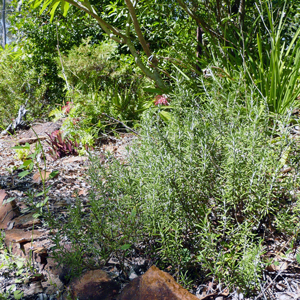
Whether using a hint of rosemary, or a good big hit, this ‘hard’ herb will give a lift to just about any food, sweet or savoury. A rosemary bush needs very little love; it will last for years once established; and, if you have limited space, its culinary versatility makes it a herb-of-choice to grow in a pot. Because of its toughness, the forgiving rosemary bush also makes a good filler plant in dry-country shrubberies where not much else will grow.


There are several varieties of upright and prostrate rosemary. All will strike roots from cuttings taken in late winter and spring, placed in water or sandy potting mix. If the green-thumb gene is not in your blood, buy an established seedling from the markets. Release it into a big fancy tub and it will repay this good deed by becoming an excellent ornamental on a balcony or near the back stairs. Each time someone brushes against the leaves, you’ll be transported by the lovely smell of Mediterranean Summer. Add a lavender plant to the tub as well, and sage, as they enjoy the same warm dry growing conditions.


Rosemary needs at least half a day of full sun, good drainage (sandy soil, a raised bed, or a pot that is seldom watered), and a little light pruning (for the kitchen) to keep it looking ship-shape. In the right spot, the bush will live on and on and on.
This ten-year old rosemary (and lemongrass) is growing inside a fenced vegetable garden. If lettuce-loving wildlife are a problem in your garden as they are in mine, a few bushes of rosemary planted around the veggie patch provide a natural deterrent. Wallabies, kangaroos and hares dont seem to like rosemary. And the more rosemary you have, the more you can use, not only in the kitchen.

In the kitchen, chopped rosemary is delicious added to tomato and cucumber salad; in marinades for chicken, fish and lamb; added to meat stews; sprinkled over vegetable bakes before they go in the oven; and as a flavour enhancer in soup. Better for you than salt.


A GREAT WAY TO USE ROSEMARY
Two-thirds fill a small (150 ml) screw-top jar with any white vinegar from the pantry. Add 1 tablespoon rosemary leaves, a good grind of black pepper, 1 teaspoon seeded mustard and 1 teaspoon grated lemon or lime peel. If you like, also add crushed clove of garlic and half small red chilli, roughly chopped. Top up the jar with olive or other vegetable oil. Best made at least 24 hours ahead and will keep for several weeks in the fridge (olive oil will solidify and go white in the fridge, but returns to normal at room temperature). 

USES: Shake well and use as a dressing for salad; in a dipping bowl with crusty bread; over hot potato, baked carrot, or warm crushed chickpeas. Also excellent to marinate lamb chops, chicken or fish for the barbecue, with no need for extra oil when cooking.


On our next ‘walk around the garden’, we’ll look at growing and using old-fashioned garden mint.

Written and compiled by two frogs.
Related Posts Plugin for WordPress, Blogger...